How to Craft Impactful Icebreakers

I was at a meeting the other day and the facilitator opened by saying, “I hate icebreakers. So, we’re not going to do one. Instead, tell me what’s the worst icebreaker you ever had to do?” [which was funny ‘cuz that’s essentially an icebreaker ;)] But omg did the participants dish! Soooooooo many folks shared … Read more


Why Focus on Team-Development?

Team-development is often seen as a “nice to do” rather than “need to have.” But in reality, the healthier a team is, the better their work is. This is especially true for teams tasked with culture-change work. Here’s why: So, let’s invest in our teams! And reach out to me if you’d like to amplify … Read more

These are a few of Sapna’s favorite things!

Below are my FAVORITE go-to, tried-and-true resources to help you develop a workplace culture that is more compassionate, courageous, and accountable. I will post more in the coming months, and each will be short and sweet to fit your busy schedules! Note: I do not receive any compensation for sharing these resources. I just really … Read more

7 Steps to Launch a Sustainable Culture-Change Initiative:

Imagine that you are a departmental director at an organization where the senior leaders want to launch a new initiative to change the workplace culture. Maybe they want to make the workplace less biased or more inclusive or more trauma-informed or centered on a growth-mindset. You see great value in this initiative and are happy … Read more

Moving From Scare City to Abundance

cracked desert setting, with a dry, leafless tree on the righthand side

This is a love letter to my fellow DEI Consultants. Lately, with all the pushback to DEI, I’ve been thinking a lot about scarcity. Scare City, more like, where fear is either a constant undercurrent or primary driver of our actions: the fear of running out of what we need, of losing income or health … Read more

What if Jeff Bezos Used Food Banks? An Examination of How NPOs Subsidize Affluence

Man sitting on a pile of gold coins, reading a newspaper.

How would you feel if I told you that Jeff Bezos got his groceries for free from a food bank?

If he did, it would probably shock and anger you, right? These feelings come up because we as a society assume that nonprofits exist to support those who are unable to access the services they need, and in our country, one of the biggest barriers to access is wealth. So, it is safe to assume that NPOs do not exist to help people like Jeff Bezos.

The (White) Elephant in the (Board) Room: How White Board Members Can Step Up By Stepping Aside

Close up of hands gesturing as if the person is explaining something

Welcome back, white board members, to the next step in your RE board development work! (note: be sure to read my last blog on racial equity and boards before launching into this one) So much of our effort to change our boards focuses on diversifying the board composition and bringing in more BIPOC members. But today, I want to take a closer look at the other demographic already in the room: the white board members. And, as part of my commitment to offer practical strategies in these blogs, I included a step-by-step activity for you to engage in.

Actually, We’re Just Getting Started: Considerations for Crafting Solidarity Statements

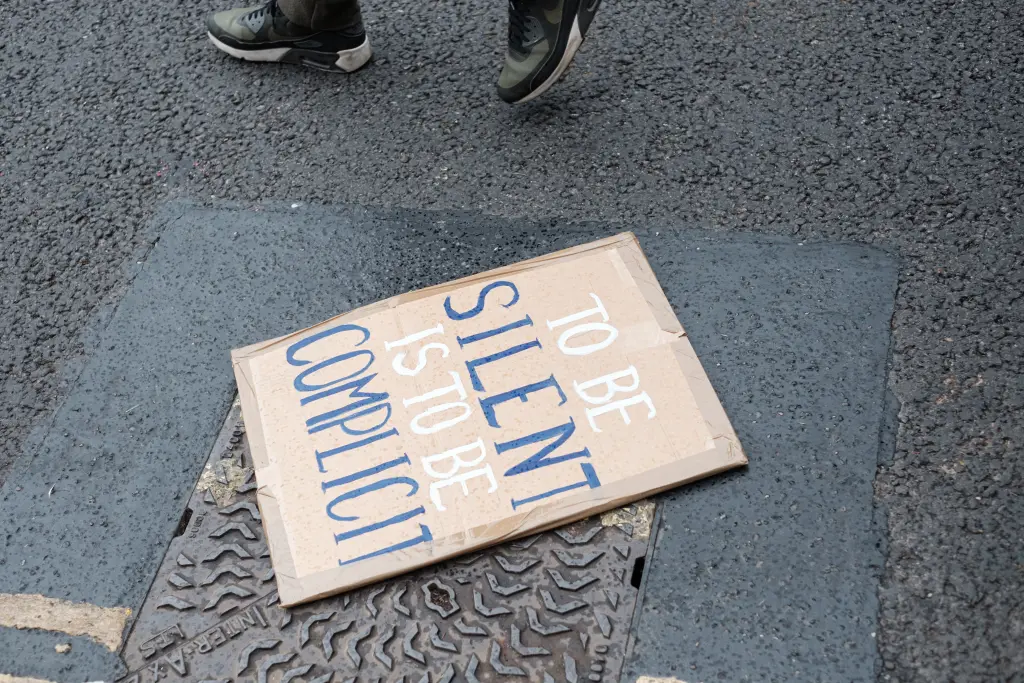
Cardboard sign on asphalt that reads: To be silent is to be complicit.

It seems like every day there’s another statement from a historically white led organization (HWL) stating that they “stand with BLM.” Overall, it is good that there is a swell of consciousness and awareness of systemic racism among HWLs. There are many white leaders out there who are really paying attention with heightened urgency and truly want to make change. In the grand scheme of things, this has the potential to be such an impactful shift of our NPO sector to really identify and uproot racism in our systems.

“If You Like It Then You Shoulda Put a RE-ng On It!” Moving Nonprofit Boards Towards Real Racial Equity (RE) Commitments

Wedding bands on volcanic rock.

Lately, it seems like every meeting I have with an Executive Director ends with them asking, “how do I bring my board along on my org’s racial equity journey?” I get it. I was an ED, I work with and for boards, and I’ve served on boards of all kinds. It’s hard. Boards are designed to play a specific role in the function of nonprofits. They guide visioning and planning and oversee the macro-level organizational functions; they hire, assess, and (if needed) fire the ED; they fundraise; they network; they donate their skills and expertise. This is often a group of highly passionate, highly skilled volunteers who believe deeply in the mission of the organization.